
This is the sixth post in a series walking through the emotions of Parkinson’s disease — one at a time, honestly, from the heart. If you missed the earlier posts, you can find them here: Shocked, Afraid, Sad, Angry, and Lonely.
Of all the things that helped my mom through Parkinson’s disease, one of the most powerful was the simplest.
Her younger sister — my aunt — would sit with her.
She didn’t try to fix anything. She didn’t offer advice or research the latest clinical trials. She just stayed close. She listened. She was there.
No one could calm Mom’s anxiety quite like she could. Her presence was Mom’s anchor through some of the hardest years.
You Don’t Need the Right Words
I’ve come to believe that being present is the most powerful way we can comfort one another. You don’t need the right words. You don’t need a plan. You just need to show up.
I once read about a simple pain experiment: people were asked to hold a bare foot in ice water for as long as they could. When someone sat nearby offering encouragement, participants lasted significantly longer. Presence mattered a lot.
Harold Kushner captured it in When Bad Things Happen to Good People: “The presence of another caring person doubles the amount of pain a person can endure.”
Comfort doesn’t erase pain. It makes it bearable.
Comfort Looks Different for Everyone
For Mom, comfort was her sister’s company. It was the lake — sitting by still water had always settled her, and it did for me, too. We went back to it again and again through the years. Looking out across that quiet surface brought us back to ourselves when Parkinson’s tried to pull us away.
During the eight years Mom was in long-term care, I leaned on my own sister Tanya in ways I hadn’t before. She was a rock — present, reliable, steady. We took turns showing up. We comforted each other.
That’s something Parkinson’s doesn’t get enough credit for: the way it deepens certain relationships. The presence it demands from people who love you. The intimacy that grows in the hard places.
Comfort isn’t loud. It’s quiet, steady, and real. It reminds you that you’re human and that you’re held.
One Thing to Try
Think of one person who feels like home to you, someone whose presence settles rather than drains. Send them a message today. It doesn’t need to be elaborate: “Thinking of you. Could we catch up this week?”
And if you’re the one offering comfort to someone with Parkinson’s, know this: your presence is doing more than you realize. You don’t have to say anything profound. Just stay close.
The Parkinson’s Path goes deeper into what comfort looks like at different stages of the disease — and how to let it in when you’re struggling to ask for help.
Words to Carry
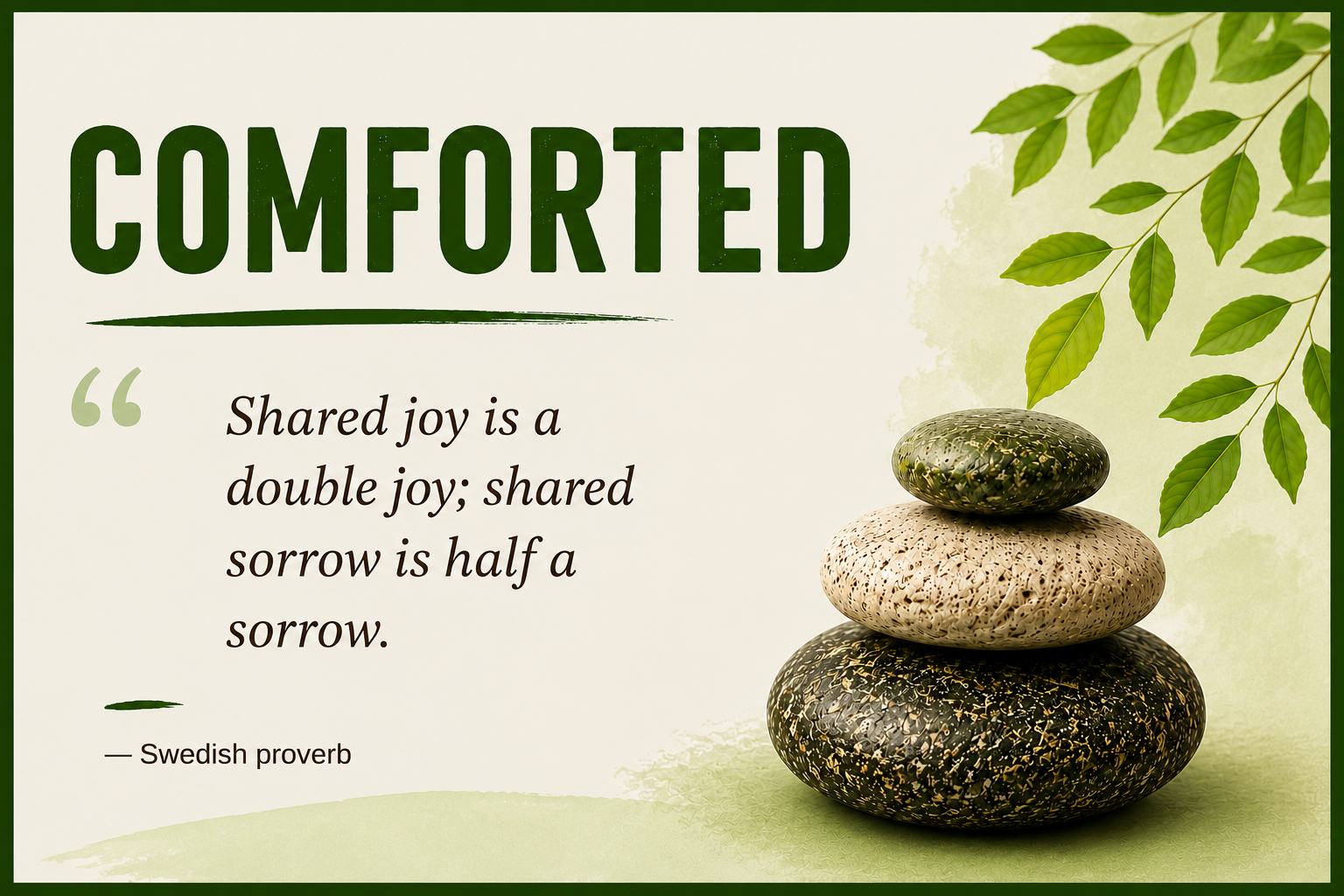
“Shared joy is a double joy; shared sorrow is half a sorrow.” — Swedish proverb
From the steadiness of comfort, something else becomes possible: clarity. Next week, we’ll talk about what it means to feel focused — and how one of Mom’s quiet habits taught me more about managing Parkinson’s than almost anything else.
Lianna Marie is the founder of All About Parkinson’s and the author of The Parkinson’s Path: Your Guide to Finding Hope, Happiness, and Meaning on Your Journey with Parkinson’s Disease, available on Amazon.