
This is the third post in a series walking through the emotions of Parkinson’s disease — one at a time, honestly, from the heart. If you missed the first two posts, you can find them here: Feeling Shocked After a Parkinson’s Diagnosis and Feeling Afraid After a Parkinson’s Diagnosis. Whether you’re newly diagnosed, a long-time care partner, or somewhere in between, I hope something here finds you.
My friend Megan was recently diagnosed with Parkinson’s.
She’s in her fifties, and like me, she swims with a Masters group where adults train across all four competitive strokes. Sometimes we compete. Mostly, we show up for the community, the challenge, and the joy of moving our bodies.
Megan is the teammate who never complains, no matter how tough the workout is. She arrives smiling, ready to dive in.
Before the diagnosis, she noticed something felt off. She called it “flatlining” in the water — she couldn’t push like she used to. Some might say that’s just a natural part of aging, but seasoned athletes are deeply in tune with their bodies. When something changes, they know.
Soon after, a tremor in her left hand sent her to a neurologist. She had a hunch it was Parkinson’s. Her father was diagnosed much later in life, so she knew the signs.
When she told me, my first instinct was to say, “I’m so sorry.” I paused. No one had died, and yet something dear had shifted. I didn’t want to project fear onto her future. Instead, I asked how she was feeling.
“Sad,” she said.
When the Words Land Without Comfort
Megan’s neurologist didn’t offer comfort when delivering the news. At the end of the appointment, he simply asked, “So when do you want to see me again? Three months? Six?”
Megan teared up. “So he tells me my life has permanently changed for the worse, and I don’t get to talk to him about it for months? That’s not going to work for me.”
I’ve heard many stories like Megan’s, even from well-meaning doctors. My mom felt that sadness too. If you’re feeling it now, that makes sense.
Sadness Changes Shape Over Time
Sadness can ride alongside Parkinson’s for a long time. What you’re sad about may change with the season you’re in.
Early on, my mom grieved what she might miss, how much care she would need, and whether she’d become a burden. As her daughter, I had my own sadness too: would she see me get married? Have kids?
There’s a name for this — anticipatory grief. You’re mourning possible future losses before they’ve even happened. I hear it often from spouses and care partners. One woman in her fifties wrote after her husband’s diagnosis: “We thought we had decades before health issues.” She felt guilty for being so sad because she wasn’t the one diagnosed, but she couldn’t stop thinking about all they might lose.
The Sadness of Being Invisible
Sadness can also come from invisibility. In the early years, Mom sometimes felt like she was lying about having Parkinson’s. To the outside world, she looked fine. Maybe you can relate. In slow-progressing or early stages, you may have days when you appear completely symptom-free. That’s a gift and a burden.
People with good intentions say, “You don’t look sick.” They mean well, but it can sting. You feel like you have to prove you’re sick instead of simply living with what you’re managing.
Isn’t it ironic? Just when you start to accept your own reality, you find yourself convincing others it’s real.
What Do You Do With Sadness?
Begin by reflecting on how you’ve handled loss in the past. We all do it differently. Some of us lean on therapy, medication, prayer, or meditation. Others need solitude, long walks, or a friend who can sit in silence.
There isn’t one right way through. Time helps, but time isn’t magic — it’s what you do with that time that matters. Let yourself cry. Talk. Reflect. Adjust. Give yourself space to rebuild emotional strength. There is steady ground on the other side, and you don’t have to find it alone.
Two Things That Help With Sadness
Remember you’re still you. Parkinson’s may shape your day, but it doesn’t replace your identity. It’s okay to feel deeply sad and still claim your humor, your gifts, your relationships. Today, try starting a “Still Me” list — five things that define you beyond Parkinson’s. Post it somewhere you’ll see it.
Reach out, even briefly. Sadness pulls you inward; isolation keeps you there. Share how you’re feeling with someone who truly gets you — a friend, a therapist, a faith leader. A simple message is enough: “I’m having a sad day. Do you have ten minutes to talk?”
If you feel overwhelmed or in crisis (U.S./Canada), you can call or text 988 for free, confidential support.
There are more Path Pointers for this emotion — including gentle ways to shift your mood through movement and grounding practices for the heavier days — in The Parkinson’s Path.
Words to Carry
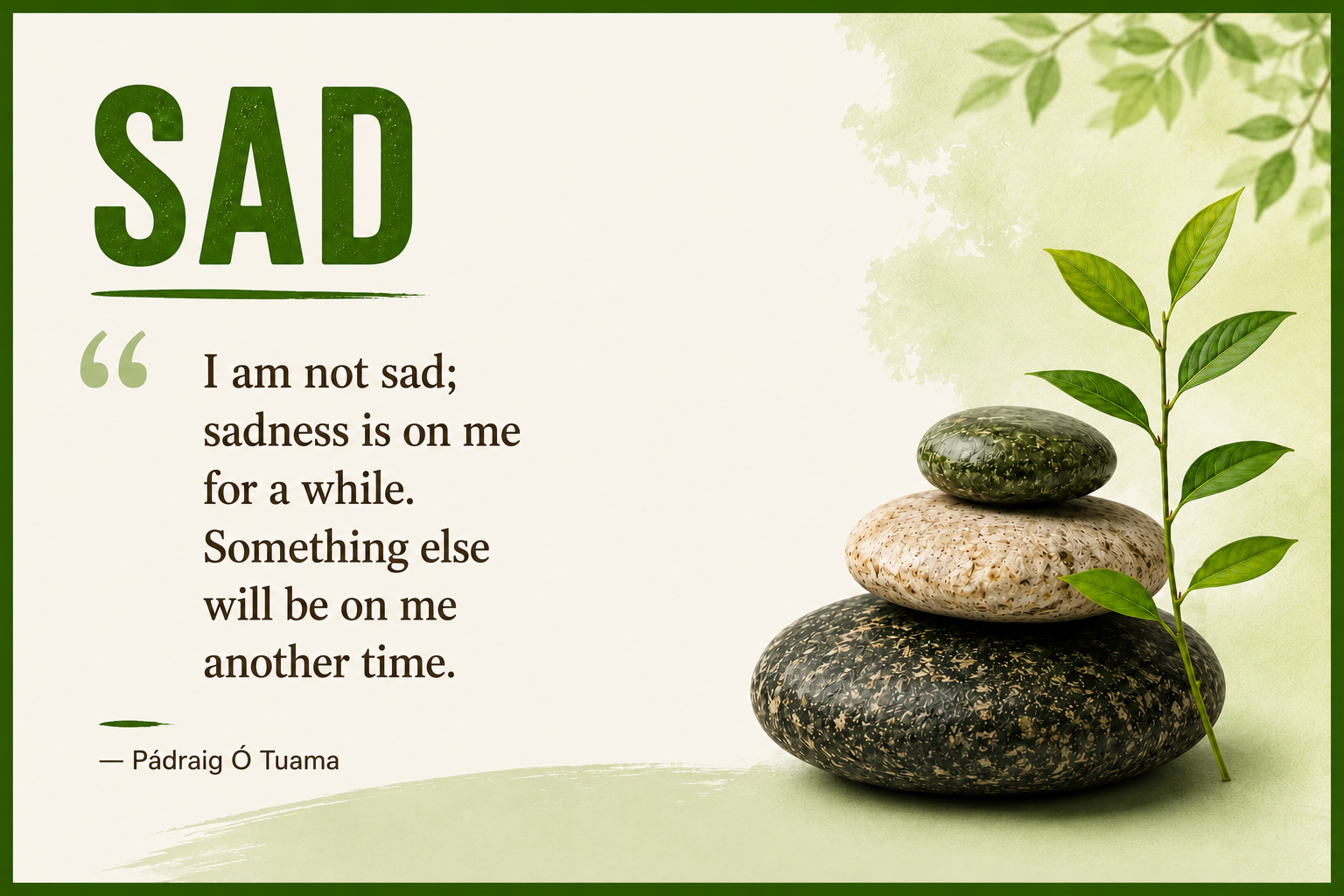
“I am not sad; sadness is on me for a while. Something else will be on me another time.” — Pádraig Ó Tuama
When sadness lingers, or when you feel misunderstood, it can sometimes drift toward anger. That’s what we’ll talk about next week — and how to work with it rather than against it.
In the meantime, if something here resonated, I’d love to hear from you. And if you know someone who needs to hear that their sadness makes sense, please share this with them.
You don’t have to figure this out alone.
— Lianna 
Lianna Marie is the founder of All About Parkinson’s and the author of The Parkinson’s Path: Your Guide to Finding Hope, Happiness, and Meaning on Your Journey with Parkinson’s Disease, available on Amazon.