
For years, you’ve been told the same thing:
Parkinson’s can’t be cured. We can only help your symptoms.
But this May, three new studies showed something different.
Not just helping with the disease you already have.
Actually finding it earlier. Treating it better. And moving closer to fixing what’s been damaged.
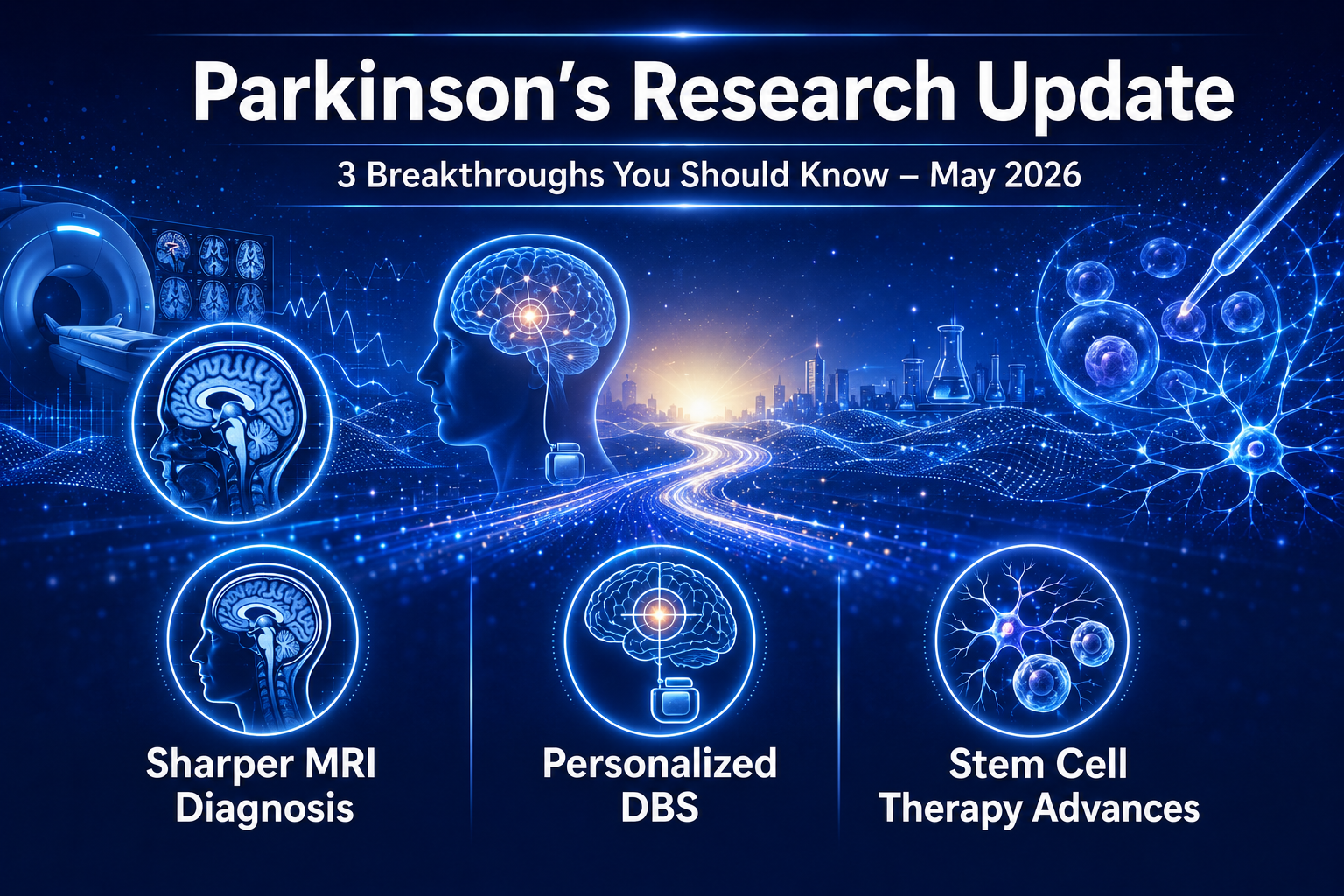
In this month’s update, we’re breaking down three of the most important developments from May—what they are, why they matter, and what they could mean for you.
1. A New Brain Scan That Could End the “Wait and See” Game
Right now, getting a Parkinson’s diagnosis can take months.
You see a doctor. They watch your symptoms. They check for other problems. You wait.
But researchers in China just tested a new type of brain scan called CLEAR-DESS.
In a study of 85 people, it found Parkinson’s brain changes with 91–94% accuracy.
Why this matters:
This isn’t available everywhere yet—it uses special scan equipment, and the study was small.
But it’s a sign that finding Parkinson’s may finally move beyond guessing.
One day soon, you might walk into a clinic and get a clear answer right away—not months of waiting.
2. Deep Brain Stimulation Just Got Personal — and It’s Working Better
DBS can change your life. But it doesn’t work the same for everyone.
Sometimes, tiny differences in where the wires go make all the difference.
Researchers in the Netherlands just proved that mapping your specific brain before surgery—instead of using the same plan for everyone—gets better results.
In a study of 220 patients:
– 96% of people who got personal planning had the best results (vs. 86% with standard planning)
– Movement got better—from 50% to 56%
Why this matters:
DBS isn’t simple. It’s not right for everyone. And this approach isn’t everywhere yet.
But here’s what’s changing: Parkinson’s treatment is being made for you — your brain, your body, your life.
Which means better treatment and a better quality of life.
3. Stem Cell Therapy Just Took a Big Step Toward Being Real
The dream of stem cell therapy has always been this: replace the brain cells Parkinson’s destroys.
The problem? Making those cells safely and in a way that could actually work in real life.
Researchers in Taiwan just solved a big piece of that puzzle.
They made brain cells that could be frozen, stored, and shipped—and then successfully put them into rats with Parkinson’s.
The results:
– 71% of cells became working brain cells
– Big improvement in 8 weeks
Why this matters:
This was still an animal study, not a human trial, so it is not close to everyday patient use.
But if cell therapy is ever going to become a real option for people with Parkinson’s, researchers have to solve the manufacturing side too. This study moved that effort forward.
What This All Means for You
For decades, Parkinson’s research has been about one thing: helping you live better with the disease.
These three studies point to something more.
- Finding it earlier—so treatment can start sooner
- Treating it better—so it works for *your* brain
- Building the path to repair—not just management
None of this is available today.
But together, these studies show something important: researchers aren’t just trying to help you manage symptoms anymore.
They’re working to catch Parkinson’s sooner, treating it better, and moving closer to reversing it.