
This is the second post in a series walking through the emotions of Parkinson’s disease — one at a time, honestly, from the heart. If you missed the first post on shock, you can find it here. Whether you’re newly diagnosed, a long-time care partner, or somewhere in between, I hope something here finds you.
“You should attend a support group,” Mom’s doctor said after her diagnosis, trying to offer hope in a moment that felt anything but hopeful.
Well-meaning? Yes. Helpful? Not for Mom.
She walked into a room where most people were much further along in the disease — many in wheelchairs, many with symptoms she hadn’t yet faced. The group wasn’t bad. In a different season, it might have been life-giving. In that moment, it was terrifying.
If only the suggestion had come with context: find a group that fits your stage.
After that meeting, Mom quietly stepped back from seeking information altogether. “If I’m going to end up like that,” she told me, “I don’t want to know about it now.”
In those early months, fear became her quiet companion.
What Fear Sounds Like in Parkinson’s Disease
She didn’t talk about it much. But when she did, it sounded like what I hear from so many people with Parkinson’s and their families:
Fear that life would be cut short. Fear of losing what she loved. Fear of losing her job. Fear of losing her ability to walk. Fear of cognitive decline. Fear of becoming a burden. Fear of suffering.
One person with Parkinson’s told me something I’ve never forgotten: “I wasn’t afraid of dying. I was afraid of losing myself before I got there.”
That’s the kind of fear that’s hard to name but easy to feel.
For Mom, early on, it wasn’t Parkinson’s itself that scared her — it was the image of Parkinson’s. What it might become. Seeing advanced symptoms up close can be more frightening than the diagnosis itself. That’s important to understand, because it means sometimes what we’re afraid of isn’t what’s actually happening — it’s a projection of what might happen years from now.
Michael J. Fox says it well: “Don’t spend a lot of time imagining the worst-case scenario. It rarely goes down as you imagine it will, and if by some fluke it does, you will have lived it twice.”
Fear Is Universal. Most of Us Pretend It Isn’t.
We keep it quiet, wanting to look strong. And in that silence, it grows.
Late-night internet searches can spin fear out fast. Suddenly you’re not just afraid — you’re stuck. Reading about late-stage symptoms when you’re newly diagnosed is like reading the last chapter of a book that’s only just begun. It tells you almost nothing useful about where you actually are.
What helped Mom most was talking. Often with her sister. Sometimes with a counselor. She also looked for solid answers — she chose one trusted book and brought her specific questions to her neurologist, rather than trying to absorb everything at once.
Fear doesn’t have to drive. Name it. Say it out loud. Make room for it — and then take the next right step.
Two Things That Help With Fear
Speak it out loud. Fear grows in silence and shrinks when spoken. Say your worries to a friend, therapist, or someone who understands where you are. Naming it makes it more manageable — and reminds you that you’re not alone. A simple message is enough: “I’m feeling scared about ___. Do you have ten minutes to talk?”
Get clear with questions. Fear of the unknown almost always feels bigger than the reality. Ask your neurologist or Parkinson’s nurse what’s actually keeping you up at night — clarity calms. Bring your top three concerns to your next appointment and ask for straight answers.
There are more Path Pointers for this emotion — including how to find a support group that actually fits where you are, grounding techniques for fear spikes, and a calm kit to have ready on the hard nights — in The Parkinson’s Path.
Words to Carry
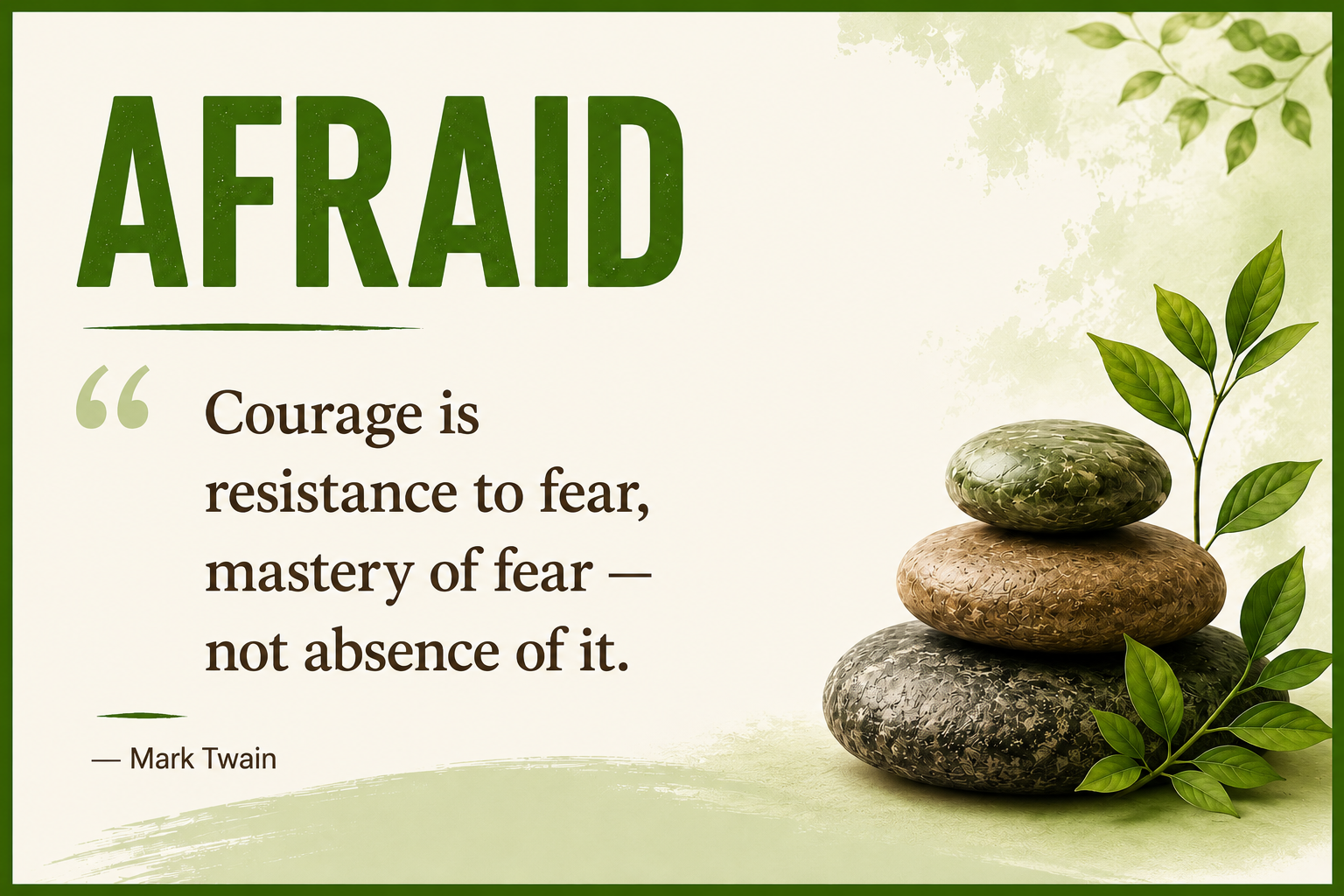
“Courage is resistance to fear, mastery of fear — not absence of it.” — Mark Twain
Fear doesn’t disappear on this journey. But it does change shape. As you learn what helps, as you find your people, as you understand more about what Parkinson’s actually means for your specific situation, fear has less room to run.
Next week, we’ll sit with the emotion that often follows fear: sadness. When the adrenaline of a diagnosis eases, the weight of what’s changing can settle in. Having language for that helps.
In the meantime, if something here resonated, I’d love to hear from you. And if you know someone who is newly navigating fear after a Parkinson’s diagnosis, please share this with them.
You don’t have to figure this out alone.
— Lianna 
Lianna Marie is the founder of All About Parkinson’s and the author of The Parkinson’s Path: Your Guide to Finding Hope, Happiness, and Meaning on Your Journey with Parkinson’s Disease, available on Amazon.