
This is the fifth post in a series walking through the emotions of Parkinson’s disease — one at a time, honestly, from the heart. If you missed the earlier posts, you can find them here: Shocked, Afraid, Sad, and Angry.
Though barely visible to anyone else, Mom’s pinky tremor felt to her like a flashing beacon announcing she was “defective.”
She knew it wouldn’t affect her work — at least not yet — but the fear of being questioned made her desperate to hide her symptoms from her boss and coworkers. She kept it private for a long time.
That space between diagnosis and disclosure can be very lonely.
People pull back, skip plans, and isolate. Some find a strange relief in being alone — at home, the guard can drop. No one is watching or judging. But that withdrawal feeds a loop: the lonelier you feel, the harder it is to reach out. The more you retreat, the deeper the loneliness grows.
One person with Parkinson’s described it to me this way: “Before Parkinson’s, I loved joking in conversations. Now, keeping up feels like decoding a foreign language. It’s like I’m watching a play I don’t quite understand anymore.”
That’s not weakness. That’s what Parkinson’s quietly does — it builds distance.
Lonely Looks Different at Every Stage
For Mom, the early loneliness was about concealment — protecting her job, managing other people’s reactions, deciding who to tell and when.
For me, the loneliness came much later, after dementia joined Parkinson’s in her final years. Our conversations became one-sided. She couldn’t offer the comfort and advice I’d always turned to. That particular ache sits deep, and I don’t think it ever fully lifts.
Of all the emotions in this series, loneliness is the one that hits me hardest.
I’m tempted to say “you’re not alone” — and I will say it, because it’s true.
But maybe the more honest version is this: you are not alone in feeling alone.
Our minds tell convincing stories, insisting we’re isolated when people are actually within reach. Reaching out is hard when you feel that way. It took Mom time to learn that too.
What Helped
It took courage, but ultimately telling her employer made a real difference for Mom. Her boss didn’t make a big deal of it. He supported her. That kind of acceptance changes everything.
Small connections add up. A walk with someone you love. A standing coffee date. A support group that actually fits where you are right now. To the outside world, these look small. To someone fighting isolation, they can be everything.
The Parkinson’s Path goes deeper into what helped — and what I wish someone had told us earlier.
Words to Carry
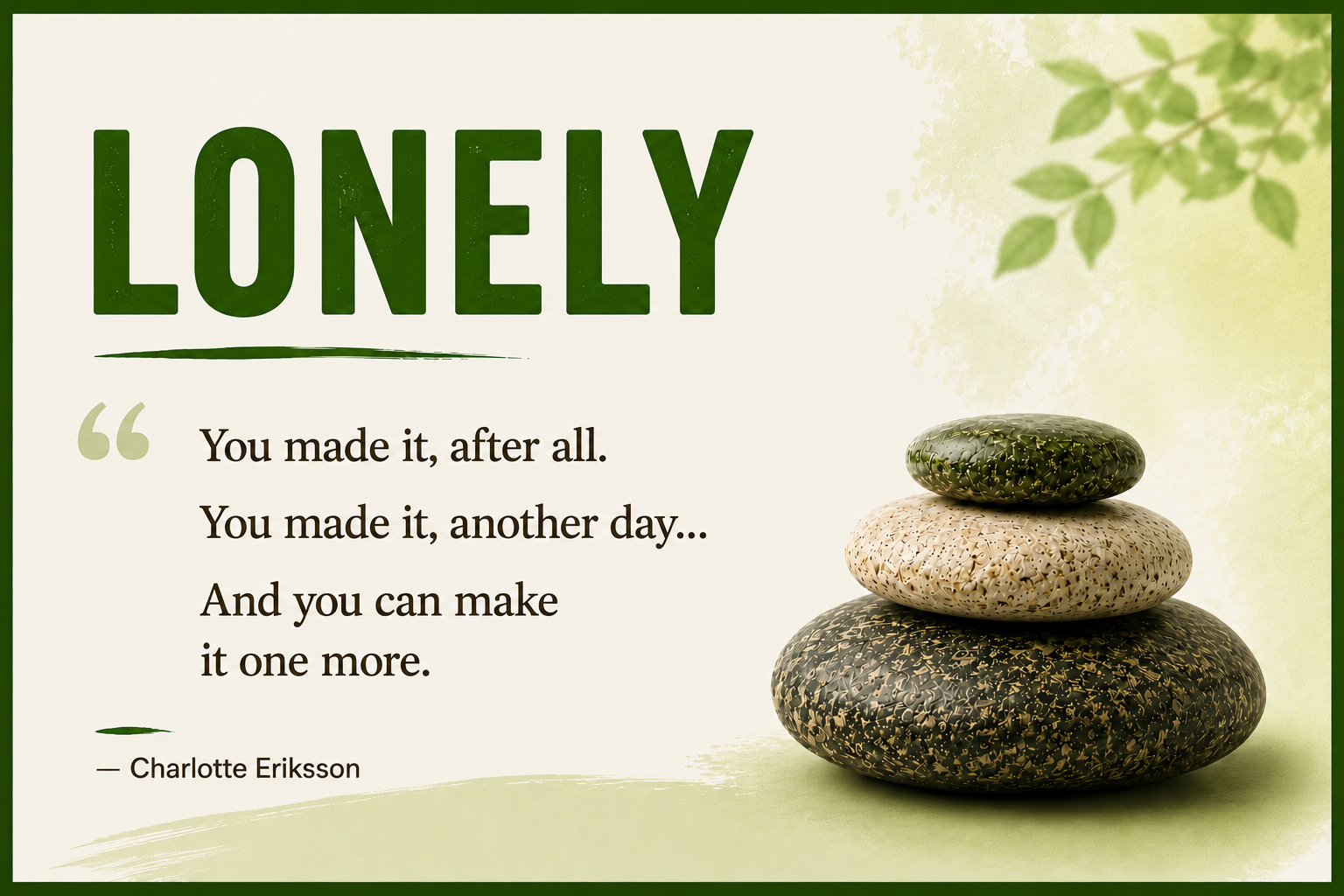
“You made it, after all. You made it, another day… And you can make it one more.” — Charlotte Eriksson
Next week we move into something warmer — the emotion of feeling comforted, and what it looks like to let comfort in when you’re in the middle of something this hard.
If this resonated, I’d love to hear from you. 
— Lianna
Lianna Marie is the founder of All About Parkinson’s and the author of The Parkinson’s Path: Your Guide to Finding Hope, Happiness, and Meaning on Your Journey with Parkinson’s Disease, available on Amazon.