
This is the eighth post in a series walking through the emotions of Parkinson’s disease — one at a time, honestly, from the heart. If you missed the earlier posts, you can find them here: Shocked, Afraid, Sad, Angry, Lonely, Comforted, and Focused.
As Mom neared the ten-year mark with Parkinson’s, I have one memory that still makes me smile.
She came home from buying a car — her first big purchase after her divorce — and she was grinning. She told me how she’d negotiated the price down all by herself. No partner, no backup. Just her.
She was proud. And so was I.
It was the early years of Parkinson’s, when her symptoms were still manageable. But what struck me wasn’t the car. It was the look on her face. She was stepping into something new — not just as a single woman, but as a woman with Parkinson’s who was quietly redefining what she was capable of.
Empowerment Doesn’t Have to Look Big
I’ve talked with many people who assume empowerment means some dramatic turning point. A big speech. A bold decision. Something you’d post about.
It rarely works that way.
For Mom, it showed up quietly. It looked like tracking her ON and OFF times so she could have a real conversation with her neurologist. It looked like speaking up when something felt wrong, even when she’d spent most of her life staying quiet in doctors’ offices.
Parkinson’s taught her to trust herself. To say what she was feeling, out loud, even when it was uncomfortable.
Before Parkinson’s, she might have kept quiet if something felt off during an appointment. After years with the disease, she learned that her doctor, however skilled, cannot fully see what’s happening in her body during a thirty-minute visit every few months. She was the expert on her own experience — and acting on that was its own kind of power.
Small Wins Stack
Empowerment doesn’t always arrive fully formed. It builds, one small win at a time.
Sometimes it looked like opening a pill bottle without help. Buttoning a shirt. Getting through a hard morning and making it to lunch. These can sound trivial from the outside. From the inside — when Parkinson’s complicates the basics of daily life — they are anything but.
The wins stacked. And as they did, Mom grew bolder. She started asking harder questions. She trusted her gut more. She pushed back when something didn’t feel right.
That shift — from staying quiet to using her voice — was one of the most powerful things I witnessed over those years.
Parkinson’s may change the shape of your life. It doesn’t get to define it.
The Parkinson’s Path goes deeper into how to build that sense of agency — including how to track symptoms, advocate in appointments, and collect the small wins that build into something solid over time.
Words to Carry
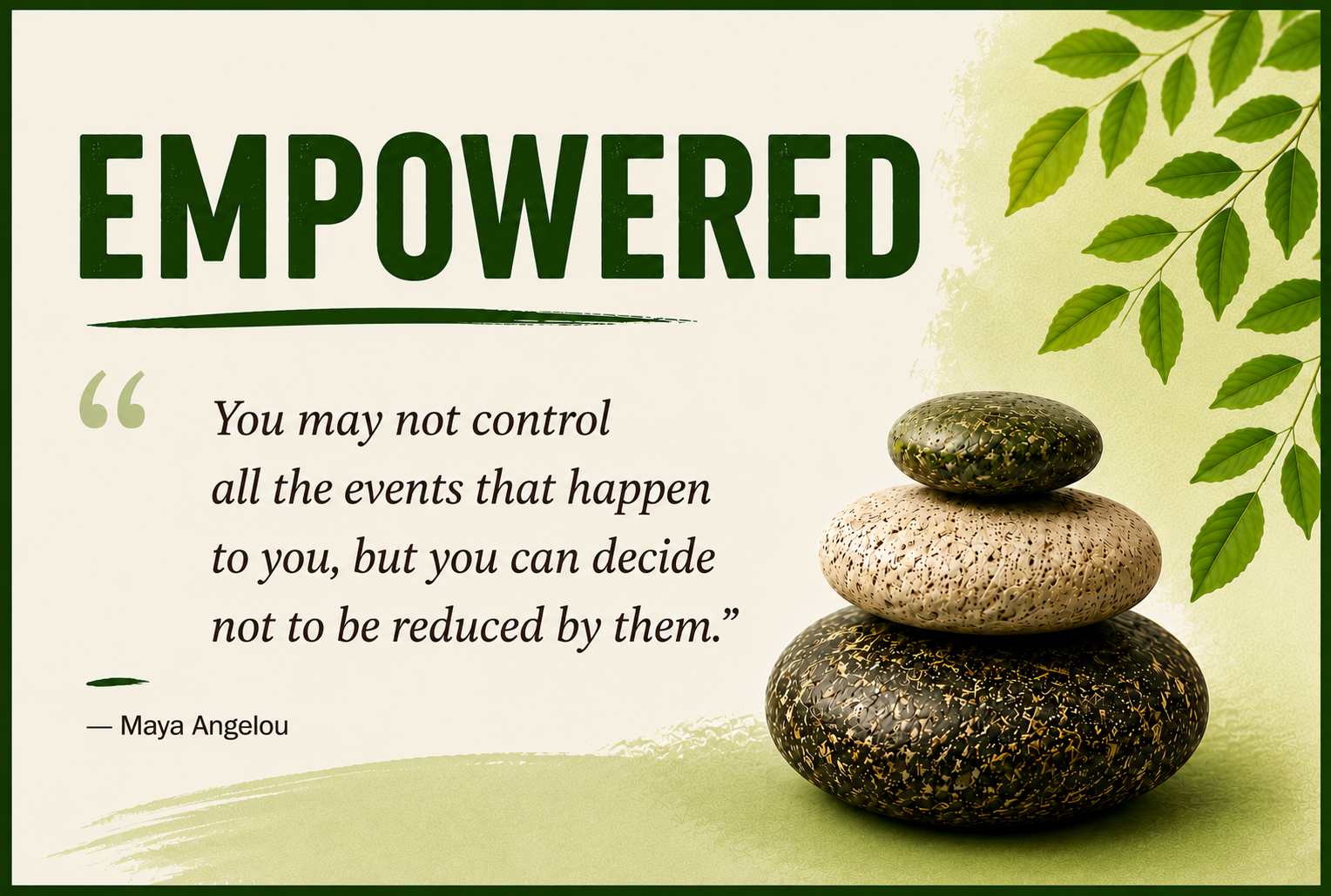
“You may not control all the events that happen to you, but you can decide not to be reduced by them.” — Maya Angelou
When empowerment takes root consistently, it matures into something deeper: a grounded, steady strength you can rely on when the path gets rocky. That’s what we’ll talk about in my next post.
Lianna Marie is the founder of All About Parkinson’s and the author of The Parkinson’s Path: Your Guide to Finding Hope, Happiness, and Meaning on Your Journey with Parkinson’s Disease, available on Amazon.