
This is the ninth post in a series walking through the emotions of Parkinson’s disease — one at a time, honestly, from the heart. If you missed the previous post, you can read Feeling Empowered After a Parkinson’s Diagnosis.
There’s a photo of my mom from her wedding to Dave that still makes me smile.
She’s posing for the camera, beaming with happiness. She looks confident, radiant, and completely comfortable in her own skin.
It wasn’t always that way.
By then, Parkinson’s had already brought plenty of challenges into her life. Her body didn’t always cooperate. Some days, even the simplest movements required extraordinary effort.
But looking at that photo, I see something beyond happiness.
I see strength.
Not the kind measured in muscles or physical endurance. The kind that grows when life keeps throwing challenges your way, and somehow, you keep showing up.
Strength Doesn’t Always Look the Way We Expect
Before Parkinson’s, Mom wasn’t particularly interested in exercise. She was busy raising four kids and taking care of everyone else.
But as the disease progressed, movement became increasingly important to her.
She discovered that walking and staying active didn’t just help her physically. It helped her feel stronger emotionally, too.
As a lifelong athlete, I’ve always understood that connection. Even on days when I don’t feel like exercising, I rarely finish a swim or a run wishing I hadn’t bothered.
Mom began discovering that same feeling.
Of course, Parkinson’s made getting motivated harder, especially when fatigue or apathy crept in. Sometimes all it took was someone offering to walk alongside her.
And sometimes, that was enough.
Strength isn’t always about pushing harder. Sometimes it’s about adapting, accepting help, or finding the courage to try again tomorrow.
The Strength We Find in Others
One of the greatest sources of Mom’s strength was the people who stood beside her.
Dave was a wonderful example. He supported her through the daily challenges of Parkinson’s, offering encouragement, patience, and companionship.
The rest of us became her cheerleaders, too.
We walked with her. Listened. Encouraged her. Advocated when she needed us.
And as her care needs increased, I discovered something important about my own strength: I couldn’t do everything alone, either.
I needed my family, friends, and the caregivers who helped us along the way.
Sometimes being strong means allowing others to be strong for you.
If you’re living with Parkinson’s, remember that strength doesn’t have to mean independence at all costs. It can mean knowing when to rest, when to speak up, and when to reach out.
In The Parkinson’s Path, I share more about building emotional strength through movement, supportive relationships, and small daily practices that help you stay grounded when life feels uncertain.
Words to Carry
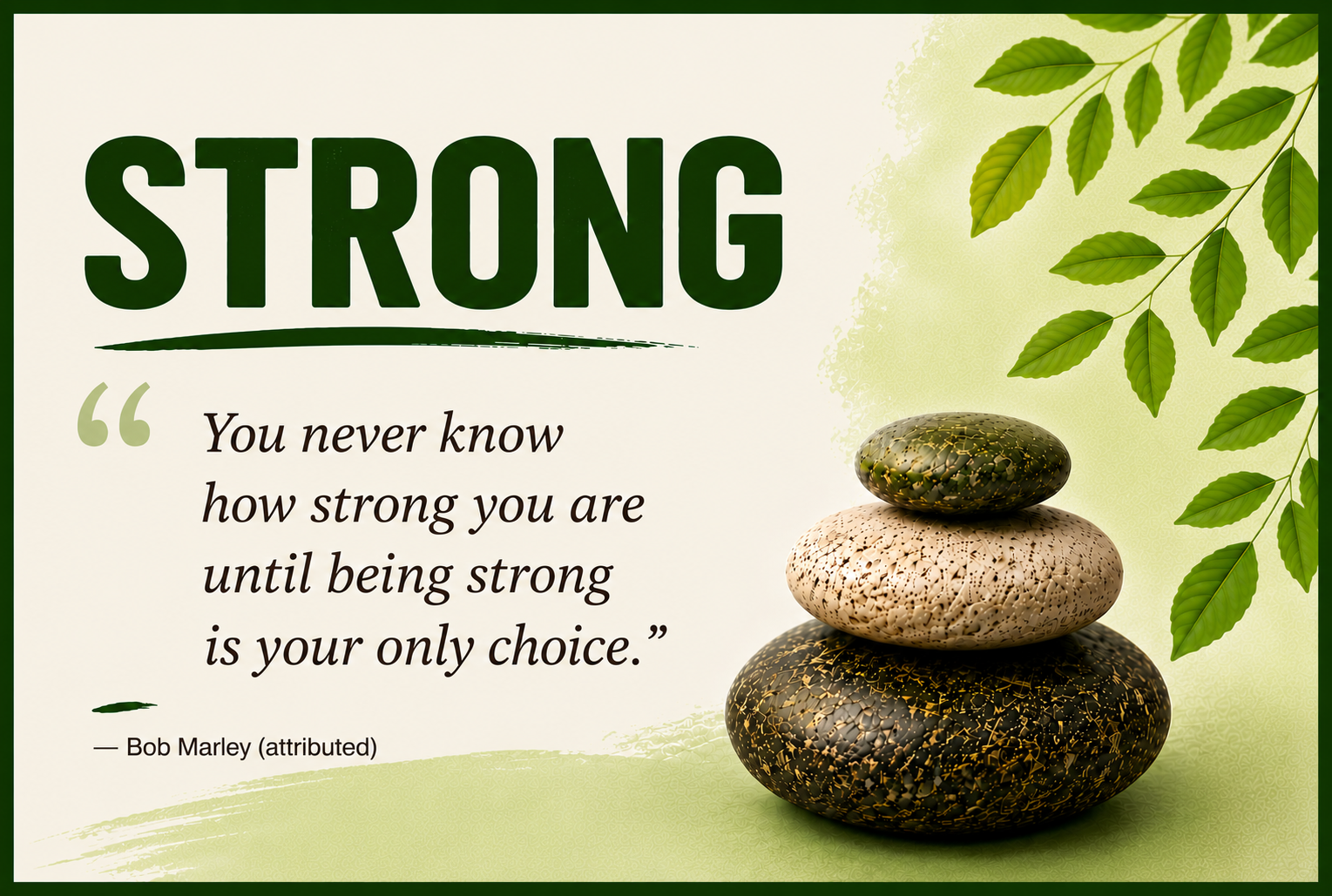
“You never know how strong you are until being strong is your only choice.”
— Bob Marley (attributed)
By the end of Mom’s first decade with Parkinson’s, she had faced challenges neither of us could have imagined when she was first diagnosed.
She wasn’t always physically strong. But emotionally, she had become more grounded, confident, and resilient.
Parkinson’s tried to shake her.
She kept showing up.
And to me, that’s what being strong really means.
When strength takes root, something else begins to grow alongside it: hope.
That’s the emotion we’ll explore next.
Lianna Marie is the founder of All About Parkinson’s and the author of The Parkinson’s Path: Your Guide to Finding Hope, Happiness, and Meaning on Your Journey with Parkinson’s Disease, available on Amazon.