
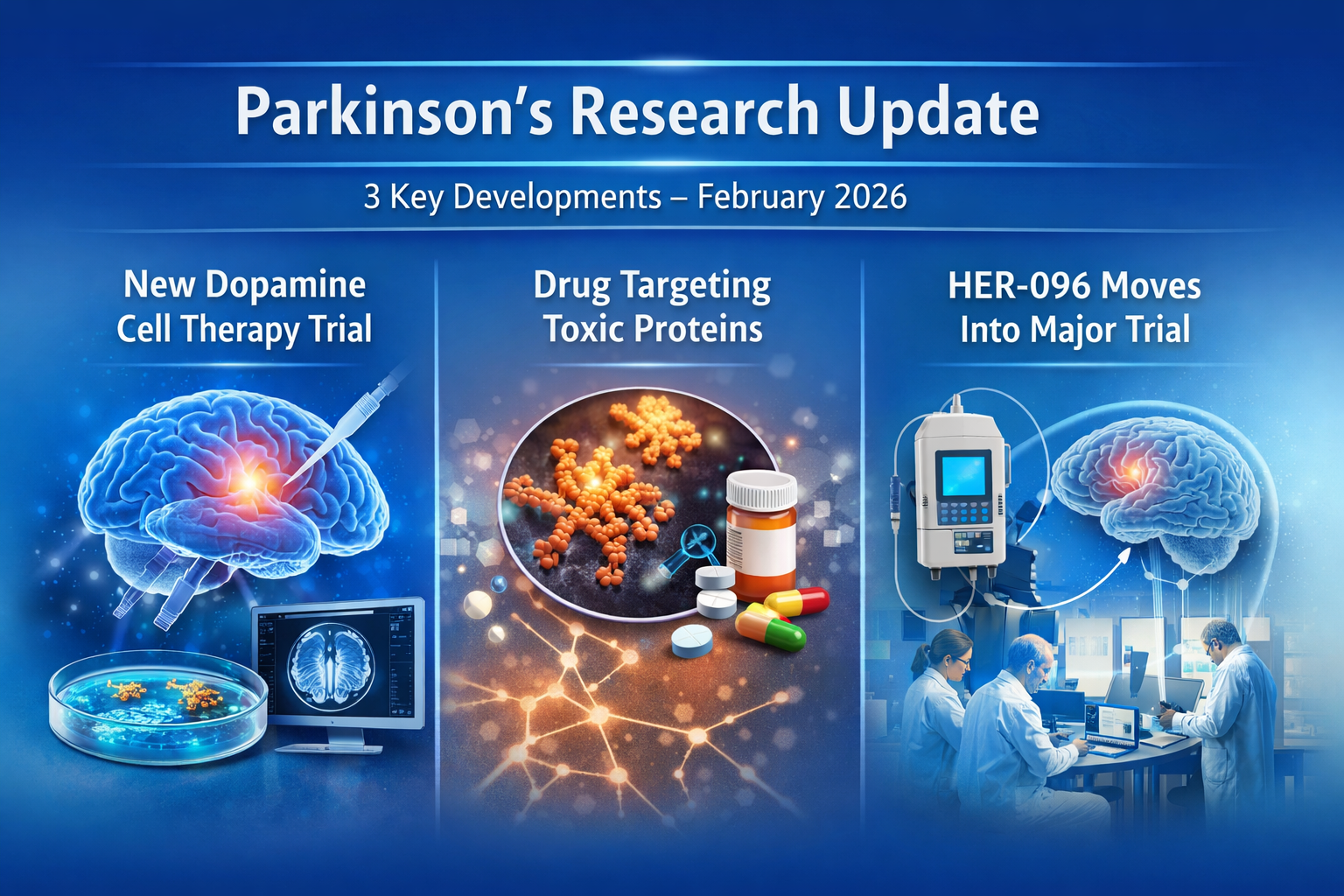
From dopamine cell therapy to drugs targeting toxic proteins, here are three developments shaping the future of Parkinson’s treatment.
1. Doctors Are Testing Whether Brand-New Brain Cells Can Fix Parkinson’s
A new trial at Keck Medicine is testing something remarkable: implanting lab-grown dopamine cells directly into the brain to replace the ones Parkinson’s destroys.
What makes this different:
Your current medications temporarily boost dopamine, then wear off. This approach replaces the actual cells that make dopamine—giving your brain back the “factory” that produces it naturally.
What this means for you:
Scientists create these cells from adult skin or blood cells, then reprogram them in a lab to produce dopamine. Doctors use MRI guidance to implant them into the exact brain region controlling movement, then monitor for 12-15 months to see if it works and keeps working.
Why this matters:
If these cells survive and produce dopamine long-term, it changes everything. Instead of refilling your dopamine tank every few hours with pills, you’re repairing the system that makes it. Even modest, lasting improvement could mean fewer medications, better movement control, and potentially slowing disease progression. That’s years of better quality of life.
2. A Drug That Might Actually STOP Parkinson’s (And We Can See It Working)
Scientists tested risvodetinib on 137 people with early Parkinson’s.
Here’s what’s remarkable…
They took small skin samples and could actually SEE the drug clearing out the toxic protein clumps that cause Parkinson’s. Higher doses led to more cleanup.
What this means:
For the first time, a treatment might be addressing the underlying disease — not just managing symptoms. And researchers can track it with a simple skin biopsy instead of invasive brain procedures.
Why this matters:
Yes, 12 weeks is too short to show major clinical improvements. But watching it reduce toxic protein buildup in actual patients? That’s evidence you’re addressing the root cause… not just treating the symptoms.
This is the kind of proof that gets larger, longer trials funded, which could genuinely change outcomes for people with Parkinson’s.
3. HER-096 Just Landed £7 Million to Test Whether It Can Actually Slow Parkinson’s Down
Herantis Pharma secured nearly £7 million from the EU for a Phase 2 trial of HER-096. HER-096 is a protein that acts like food for the dying brain cells in Parkinson’s, helping them survive and work better. It’s delivered directly into the brain through a small pump so it can reach the exact areas that need help.
What this means for you:
Current Parkinson’s treatments only mask symptoms—they don’t stop the disease from getting worse. HER-096 uses growth factors to help damaged brain cells survive and function. It’s been promising for years, but funding gaps kept it stuck in early research. This EU grant pushes it into the trial that can prove whether it actually works.
Why this matters:
A treatment that slows progression—not just covers symptoms—would be life-changing for people with Parkinson’s. Large grants don’t guarantee success, but they do something critical: they speed up the timeline to real answers. And for anyone living with this condition, faster answers mean hope arrives sooner.